Recycling and Sustainability for Gardener Rotherhithe
Welcome to the overview of sustainable rubbish gardening and the eco-friendly waste disposal area championed by Gardener Rotherhithe. This page outlines how local green-space management, careful waste separation and community partnerships create a low-carbon, circular approach for gardening in Rotherhithe. Our aim is to balance practical on-the-ground gardening with measurable environmental targets so that every pallet of soil, bag of green waste and discarded pot is treated as a resource, not refuse. Whether you're an experienced Rotherhithe gardener or new to sustainable gardening Rotherhithe, these principles help maintain healthy soil, reduce landfill and support neighbourhood reuse.Recycling percentage target and borough separation approach
We are setting a clear recycling percentage target: 65% diversion of garden and household waste from landfill across our projects within 36 months. This target is aligned with borough-level initiatives: Southwark and neighbouring boroughs emphasise separated collections for food waste, garden waste, mixed recycling (paper, cans, plastics) and glass. By separating organics at source and diverting bulky garden items to reuse streams, the Rotherhithe gardening community contributes to that wider municipal target and raises the standard for local sustainable waste management.
Local transfer stations, reuse centres and recycling activity
The sustainable rubbish gardening area is supported by nearby transfer stations and reuse centres run by the borough and partners. These facilities accept green waste for composting, bulky items for repair and redistribution, and mixed recyclables for sorting — creating a pipeline from garden pruning to new planting beds. Typical recycling activity in the area includes:- Food and green waste collections for municipal composting and anaerobic digestion
- Glass and mixed recycling separated at source per borough guidance
- Textile and small-bulky collection slots coordinated with community reuse schemes
The project places emphasis on practical partnerships with charities and social enterprises. We work with local community gardens, food-growing charities, and reuse organisations who accept pots, tools and salvaged timber. These collaborations keep usable materials circulating locally: surplus topsoil can be shared with community allotments, unwanted planters can be refurbished by social enterprises, and viable shrubs or saplings can be donated to greening projects across the borough. Strong charity partnerships are central to making the eco-friendly waste disposal area truly circular.
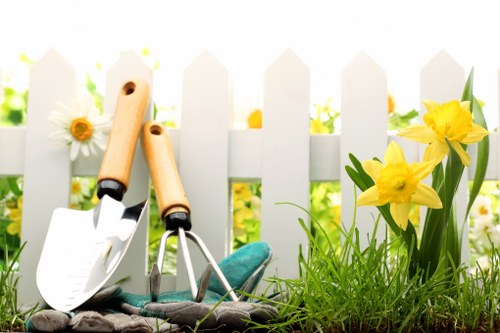 A sustainable rubbish gardening area requires careful on-site systems: separate compost bays for woody and non-woody waste, clear signage to reflect the boroughs approach to waste separation, and lockable, weatherproof storage for materials awaiting transfer. Composting and mulching are prioritised to reduce the need for municipal disposal — finished compost is used in beds and containers to close the loop. In addition, we maintain a simple reuse register so gardeners and community groups can list and claim tools, timber offcuts and planting materials before they enter the municipal waste stream.
Our low-carbon logistics are a visible part of the programme. We deploy a fleet of low-emission vans — including electric and hybrid models — to collect garden waste and deliver reclaimed materials across Rotherhithe. For narrow streets and pedestrian zones we complement vans with cargo bikes and trailer systems, cutting emissions and noise. These choices support the Gardener Rotherhithe commitment to reducing transport-related emissions while ensuring materials move efficiently between the garden, local transfer stations and charity partners.
The eco-friendly waste disposal area also includes on-site sorting points: separate skips for green waste, containers for recyclable plastics and metal, and secure bays for items destined for reuse or charity pickup. A concise list of accepted materials helps residents and volunteers contribute correctly:
- Garden organics: prunings, grass, leaves, woody materials
- Compostable food waste: peelings and small kitchen scraps where collected
- Mixed recycling: paper, card, cans and hard plastics as per borough guidance
- Glass and textiles: segregated or taken to kerbside/reuse centres when collected
 Partnerships with charities are key to widening impact. We collaborate with local reuse charities to redistribute usable tools and materials; community food projects to accept surplus produce; and volunteer-led organisations that refurbish and resell items. These alliances reduce waste, create jobs and support training in green skills. A coordinated approach with charitable partners ensures bulky garden waste is either transformed into garden soil amendments or diverted to projects where it can support biodiversity and local food growing.
Actions for residents and community groups
To reach and maintain our recycling percentage target of 65% and beyond, we encourage the Rotherhithe community to take the following steps: separate organics at source, use labelled containers for different streams, participate in local swap days to extend product lifecycles, and opt for low-carbon collection options where available. Maintaining a strong, visible network of low-emission vans and cargo bikes reduces the carbon footprint of collections, while transfer stations and reuse partners ensure that valuable garden materials are processed locally rather than transported long distances.In summary, the sustainable approach to rubbish gardening in Rotherhithe combines clear recycling targets, borough-aware waste separation practices, strategic use of local transfer stations, and effective partnerships with charities — all served by a low-carbon collection fleet. By embedding these practices in everyday gardening and site management, Rotherhithe gardeners can create greener public spaces, healthier soils and a resilient, circular resource economy for the neighbourhood.